
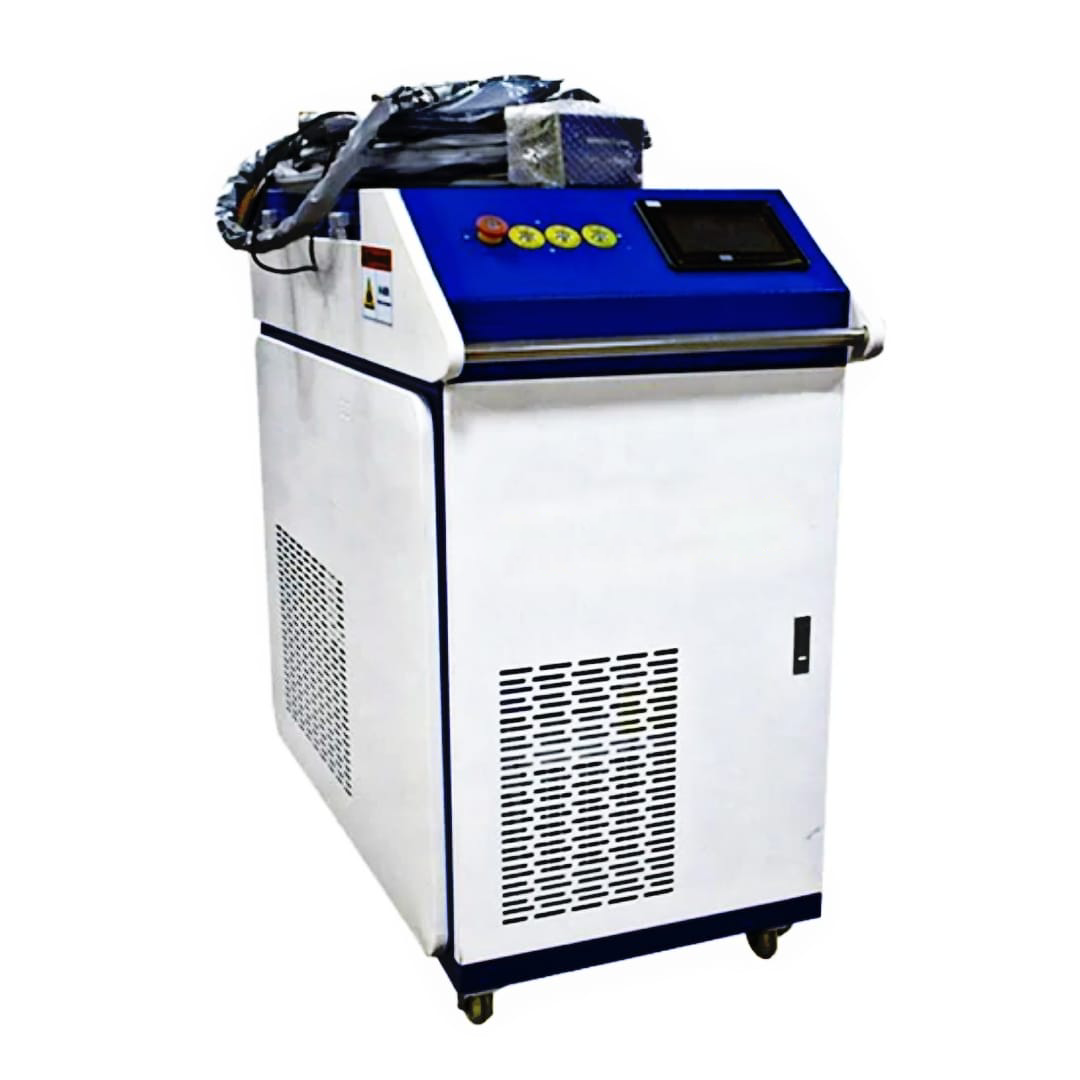
Laser Welding Machine
High-precision laser welding machines use a focused laser beam to join metals with minimal heat input and very narrow heat-affected zones. They deliver fast, repeatable welds with excellent visual quality and low distortion – ideal for thin sheets, complex assemblies and dissimilar-metal joins. Modern systems include fiber lasers, Nd:YAG options, robotic or handheld workstations, and integrated cells with vision guidance or conveyor automation for high throughput. These machines reduce post-weld finishing, raise part yields and suit automated production lines across automotive, electronics, medical and energy sectors
Why Laser Welding
Laser welding offers concentrated energy input for precise joints, faster cycle times and minimal thermal distortion. It works for small spot welds and long seams, supports automation (robot or cobot) and can weld difficult alloys with consistent results, making it a preferred choice for modern manufacturing.
Key Features
- Fiber and Nd:YAG laser options for application flexibility.
- High energy density for narrow seams and shallow HAZ
- Robotic and cobot integration for automated production.
- Variable beam control and welding modes for tailored results.
- Servo-controlled/vision-assisted welding for repeatable accuracy.
- Low spatter and reduced post-processing.
- Handheld and cell configurations to suit workshop or on-line repairs.
Applications
- Automotive assemblies: body panels, brackets, transmission and fuel system components where narrow HAZ and precise joins reduce distortion and improve strength.
- Battery and EV manufacturing: busbar-to-cell and tab welding requiring tight control, traceable quality and minimal heat damage.
- Medical devices: micro-welding of implants, surgical tools and housings where cleanliness and repeatable small welds are critical.
- Electronics and enclosures: seam welding for housings, connectors and delicate parts with low thermal distortion.
- Energy and industrial equipment: heat exchangers, pipework and components that require deep-penetration seams or dissimilar metal joins.
- Repair and maintenance: handheld laser welders for onsite repairs, cleaning and finishing, faster than TIG with less rework.
Benefits of Buying a Laser Welding Machine
Laser welding increases throughput by shortening cycle times and reducing secondary finishing. It lowers scrap rates through precise energy control and minimizes part distortion thanks to a concentrated heat source. The technology supports automation and traceability, which improves repeatability and overall production efficiency. Long-term, laser welding reduces operating costs by cutting rework, consumables and manual labour.
Why Choose Remitek Laser Welding Solutions
Remitek offers configurable laser welding cells and handheld options matched to your production needs. Our systems combine industry-grade fiber lasers or Nd:YAG sources with robotic/cobot integration, vision guidance and process monitoring for consistent weld quality. We provide tailored beam-mode control, fixture design and application testing so you get the optimal laser parameters for your material and joint. With local service, spare parts and application support, Remitek helps you start productive, repeatable welding quickly and keep uptime high.